

How Do You Clean The Arctic 8 Horizon Tech
This calendar week, we're going to talk almost desktop pools and how to create your first desktop pool in your new Horizon environment.
Desktop Pools – Explained
So what is a desktop puddle?
Desktop pools are a logical grouping of virtual machines that users can admission, and these groupings control specific settings about the pool. This includes how the desktops are provisioned and named, protocols that are available for connectivity, and what physical infrastructure they are deployed on.
Horizon has a few dissimilar types of desktop pools. Each pool handles desktops in dissimilar means, and they each have dissimilar purposes. The type of pool that you select will be determined by a number of factors including the use case, the storage infrastructure and application requirements.
The type of desktop pools are:
- Full Clone Pools – Each virtual desktop is a total virtual machine cloned from a template in vCenter. The virtual machines require a desktop management tool for mail service-deployment management. VMs are customized using existing Guest Customization Specifications. These desktops commonly persist later on the user logs out.
- Linked Clone Pools – Each virtual desktop is based on a parent VM snapshot and shares its disk with the parent virtual machine. Changes to the linked clone are written to a delta deejay. The virtual machines are managed by View Composer. Linked Clone desktops tin can exist Floating or Dedicated assignment, and they can be configured to be refreshed (or rolled back to a known good snapshot) or deleted on logoff. Linked Clone desktops are officially deprecated in Horizon 2006, and they will be removed in a future release.
- Instant Clone Pools – Each virtual desktop is based on a parent VM snapshot. The snapshot is cloned to a VM that is deployed to each host, powered up, and and then stunned. All guest VMs are and so "forked" from this VM and apace customized. Invitee VMs share virtual disks and initial retentiveness maps with the parent VMs. VMs are managed by vCenter and a "next generation" Composer that is congenital into the Connection Servers.
- Transmission Pools – The machines that brand upwards the transmission pool consist of virtual and/or physical machines that have had the View Agent installed. These machines are not managed by Horizon.
- Remote Desktop Session Host Pool – The machines that make up these pools are Windows Servers with the Remote Desktop Session Host Role installed. They can be provisioned as linked clones or manually, and they are used for published desktops and published applications.
There is one other option that needs to be selected when creating a desktop puddle, and that is the desktop consignment type. There are 2 desktop assignment types:
- Floating Assignment – Desktops are assigned to users at login and are returned to the puddle of available desktops when the user signs out.
- Defended Assignment – Desktops are assigned to a user, and the user gets the same desktop at each login. Desktops can exist assigned automatically at get-go login or manually past an administrator.
Creating Your Desktop Image
Before y'all can create a desktop pool, you lot need to take configured a desktop virtual machine with all of your applications and optimizations configured. This virtual machine will be the template or aureate pattern for all of the virtual machines that Horizon will deploy equally part of the pool.
The virtual desktop template details, including the virtual car specifications and installed applications, will depend on the results of any use example definition and desktop assessment exercises that are performed during the project's design phase.
I won't cover how to create a desktop or RDSH template in this serial. Instead, I recommend you check out the Edifice an Optimized Windows Image guide on VMware Techzone or Graeme Gordon's session from VMworld – DWHV1823 Creating and Optimizing a Windows Image for VDI and Published Applications.
Creating A Desktop Pool
For this walkthrough, I volition be doing an Automatic Floating Assignment Instant-Clone desktop puddle. These are otherwise known as Non-Persistent desktops considering the desktop is destroyed when the user signs out.
If you're familiar with previous versions of the serial, you'll notice that in that location are more screens and the order that some steps are performed in has changed. Please note that some of the carte du jour options volition change depending on the type of desktop pool you lot're provisioning.
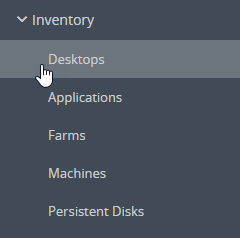
1. Log into the Horizon 7 Administrator. Nether Inventory, select Desktops.
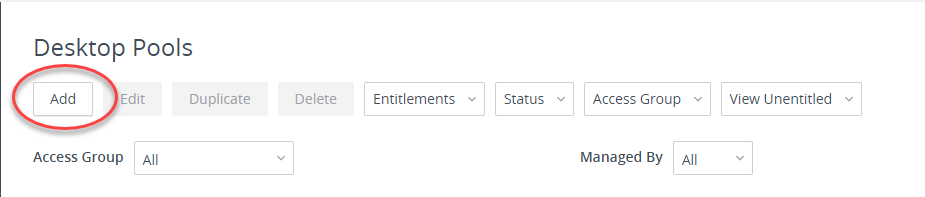
2. Click Add to add a new puddle.
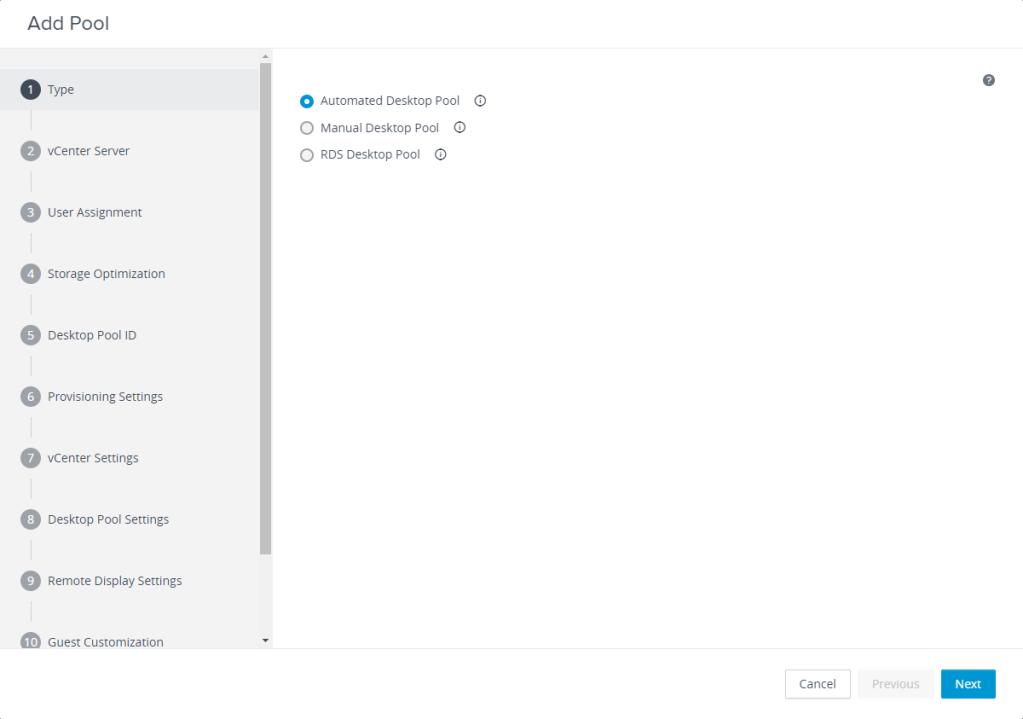
3. Select the Pool Type that you want to create. For this, we'll select Automated Puddle and click Adjacent.
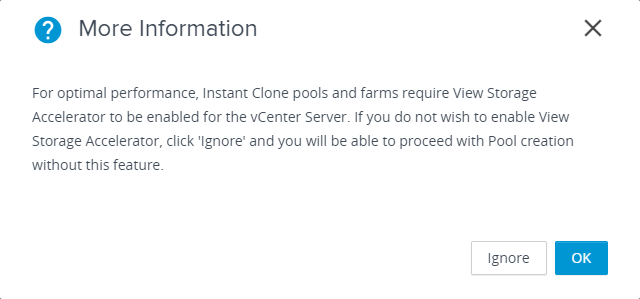
Annotation: In some environments, y'all may run into the following error if you're using Instant Clones when View Storage Accelerator is disabled.
4. Choose the blazon of virtual machines that will be deployed in the environs. For this walkthrough, select Instant Clone. If you take multiple vCenter Servers in your environment, select the vCenter where the desktops will be deployed. Click Next.
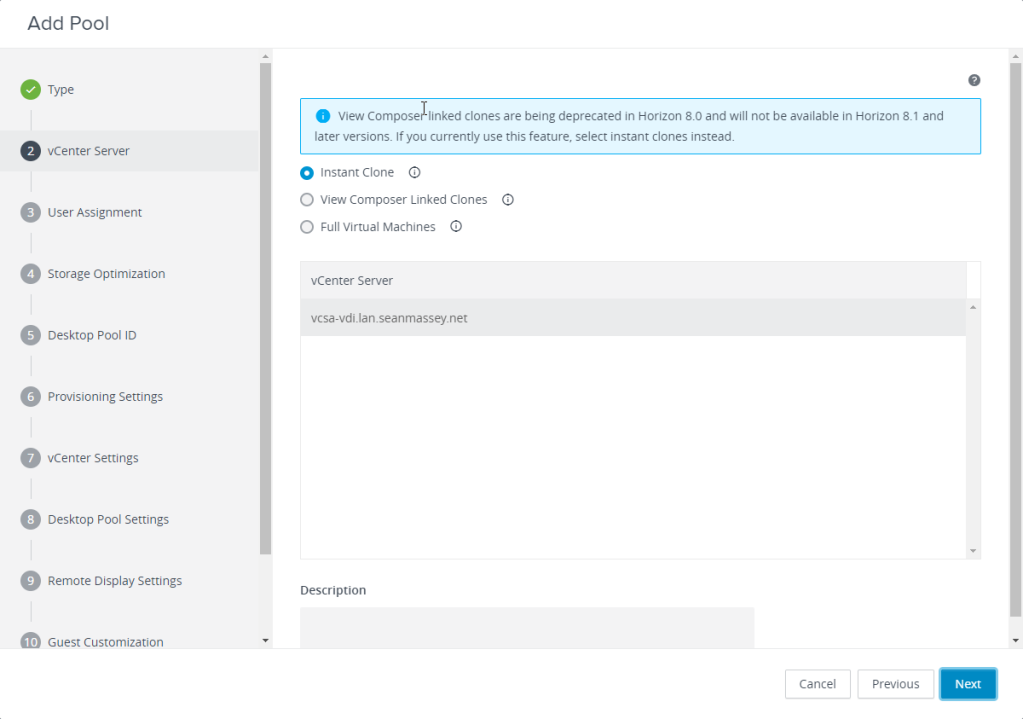
5. Select whether you want to have Floating or Defended Desktops. For this walkthrough, nosotros'll select Floating and click Next.
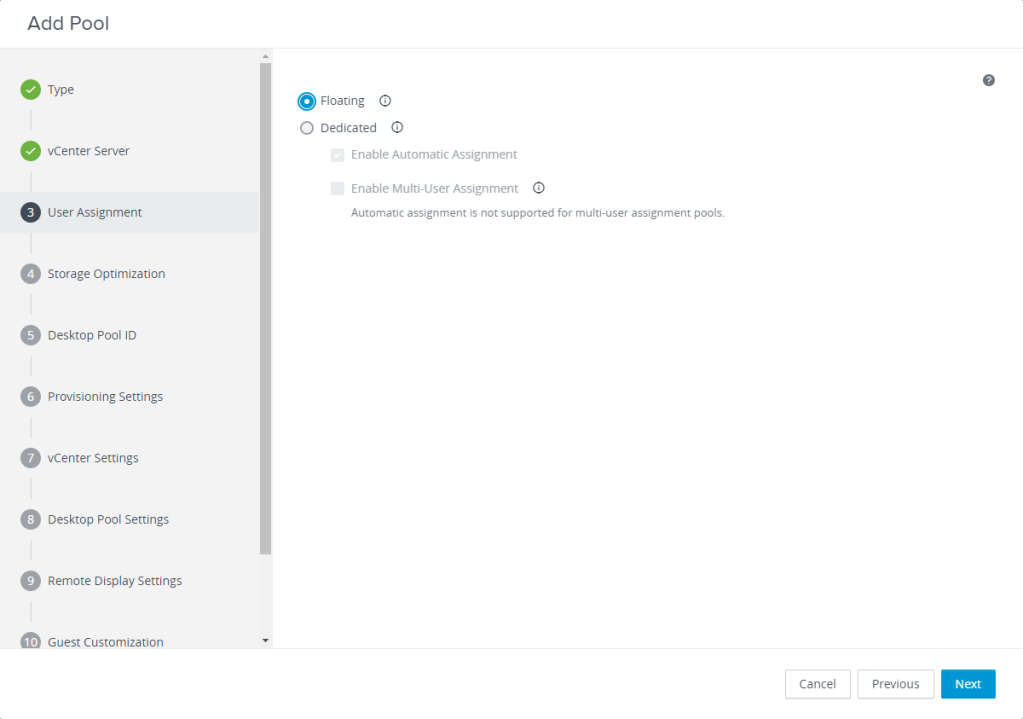
Notation: The Enable Automated Assignment pick is only available if y'all select Dedicated. If this option is selected, View automatically assigns a desktop to a use when they log in to defended pool for the beginning fourth dimension.
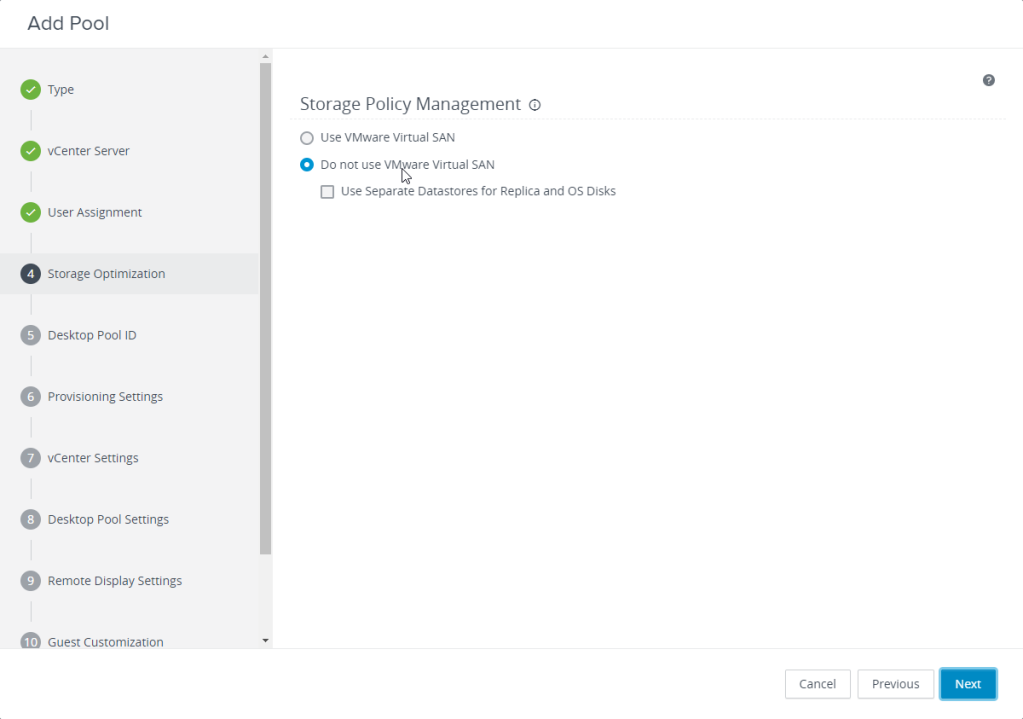
6. Select whether VSAN will exist used to store desktops that are provisioned past Horizon. If VSAN is not existence used, select the second option –"Do Non Use VSAN."
If you want to store the Instant Clone replica disks that all VMs are provisioned from on different datastores from the VMs, and y'all are not using VSAN, select theUse Split Datastores for Replica and Data Disks.
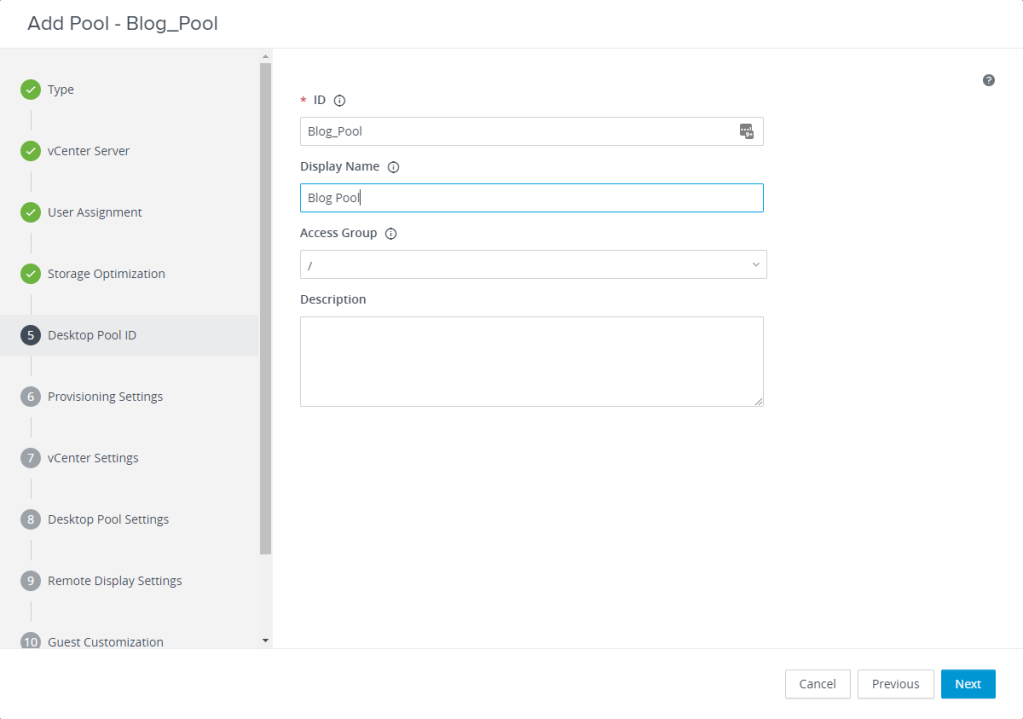
7. Each desktop pool needs an ID and, optionally, a Display Name. The ID field is the official name of the pool, and it cannot contain any spaces. The Display Name is the "friendly" name that users volition see when they select a desktop pool to log into. You can likewise add together a description to the pool.
viii. Configure the provisioning settings for the pool. This screen allows you to command provisioning behavior, computer names, and the number of desktops provisioned in the pool.
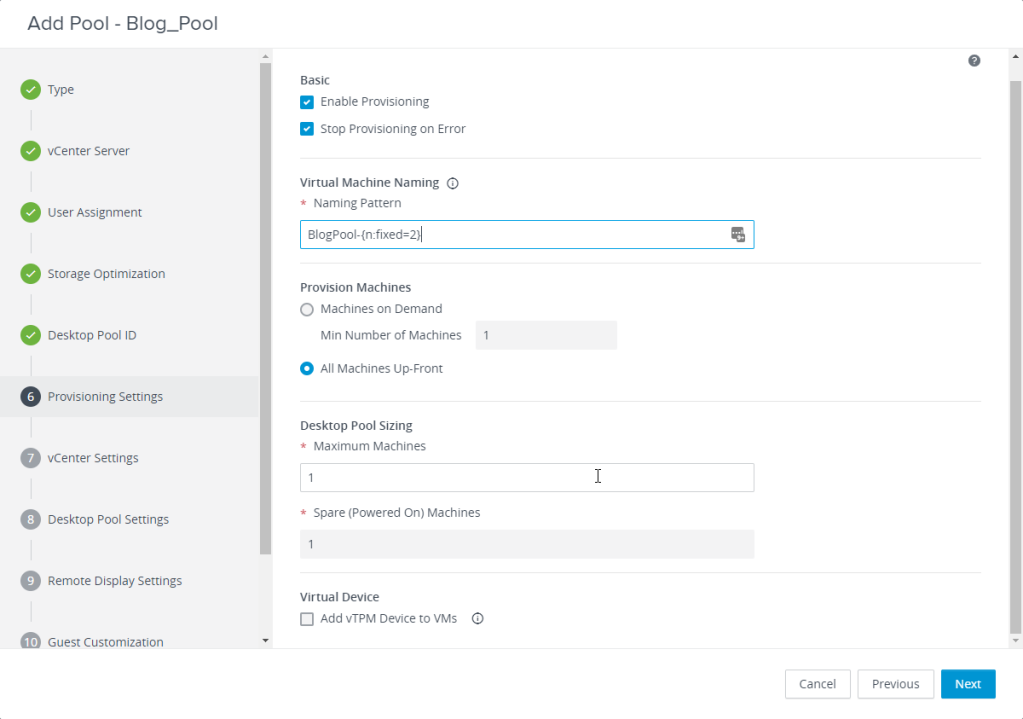
nine. Subsequently configuring the pool'due south provisioning settings, you need to configure the pool's vCenter settings. This covers the Parent VM and the snapshot that the Instant Clones will be based on, the folder that they will be stored in within vCenter, and the cluster, datastores, and, optionally, the networks that volition be used when the desktops are deployed.
In order to configure each setting, you lot will need to click the Scan button on the correct hand side of the screen. These steps must be completed in order.
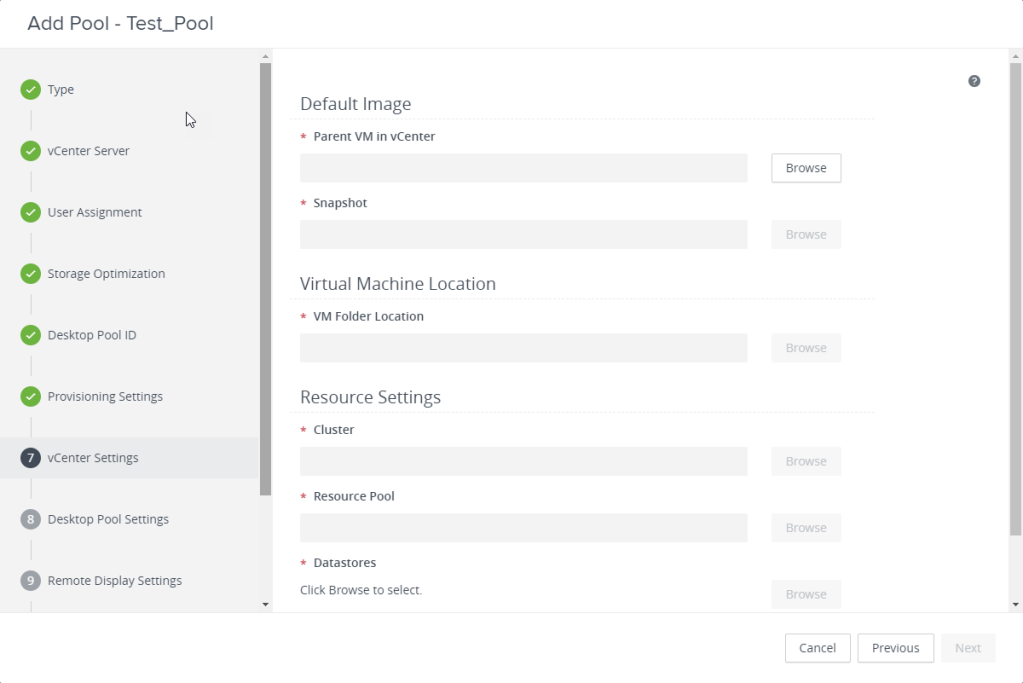
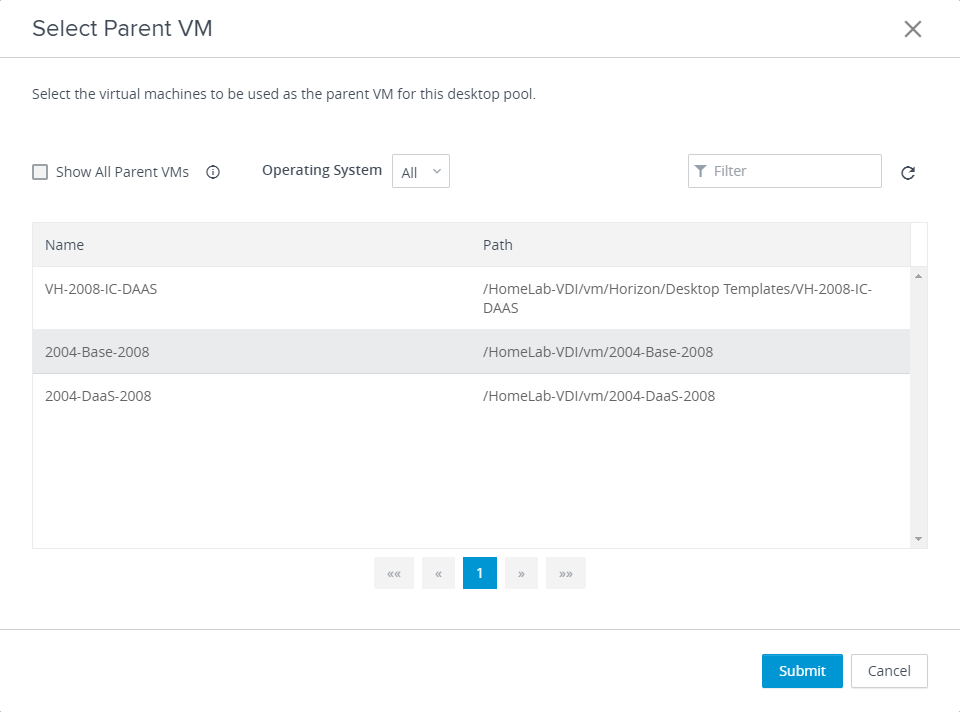
nine-A. Outset, select the parent VM that the Instant Clone desktops will be based on. Select the VM that you desire to utilize and click Submit.
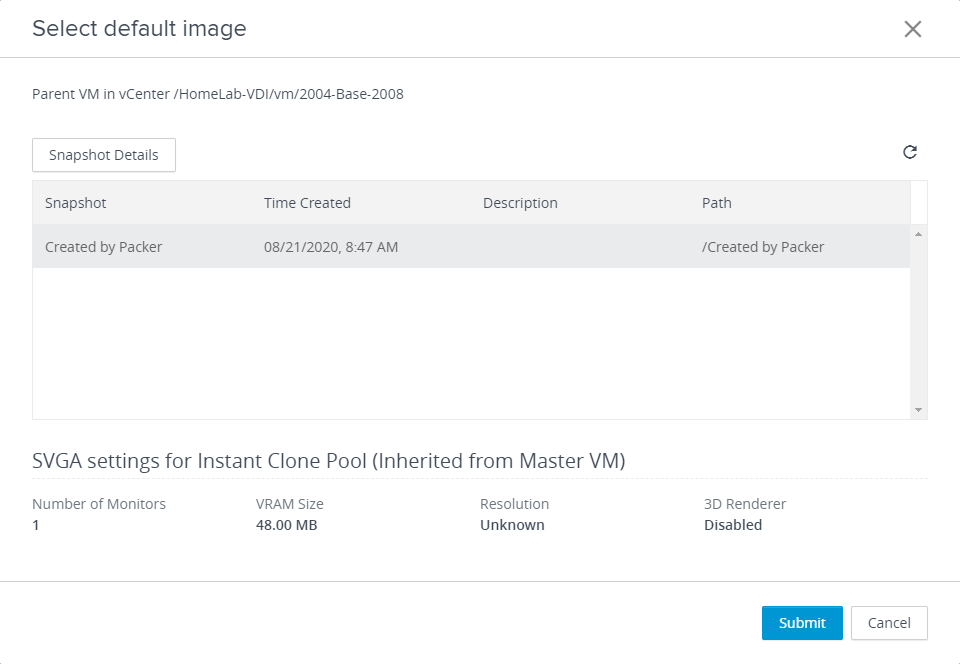
9-B. The next step is to select the Parent VM snapshot that the Instant Clone desktops will exist based on. Select the snapshot that you desire to use and click OK.
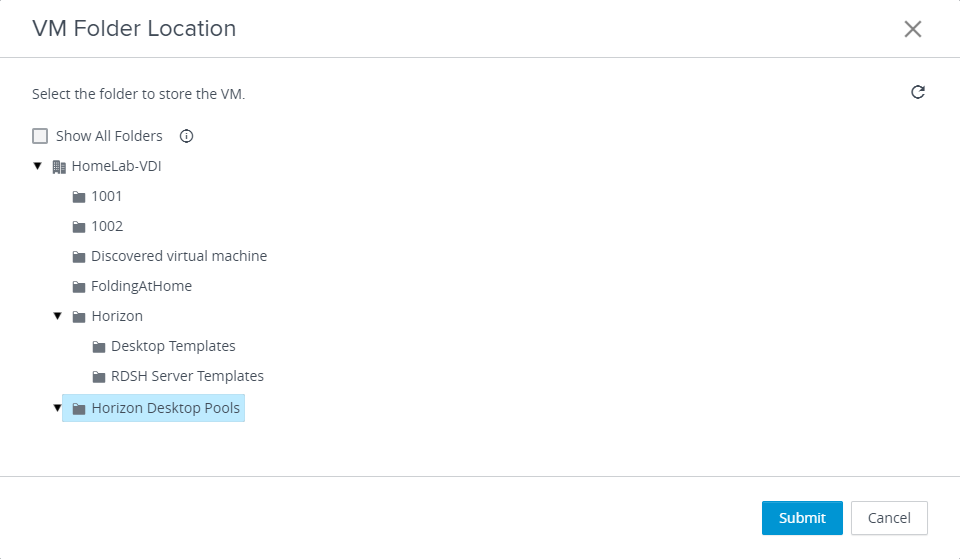
9-B. Later you have selected a Parent VM and a snapshot, you demand to configure the vCenter binder in the VMs and Templates view that the VMs volition be placed in. Select the binder and click OK.
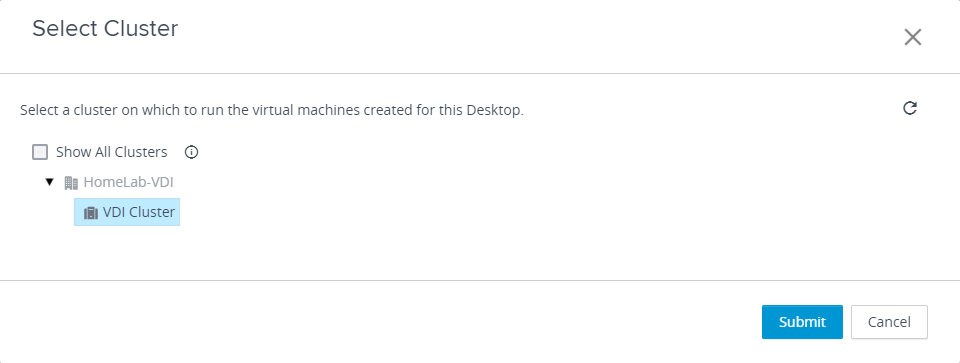
nine-D. The next step is to place the pool on a vSphere cluster. The virtual machines that make up the desktop puddle will be run on this cluster, and the remaining choices will be based on this selection. Select the cluster that they should be run on and click OK.
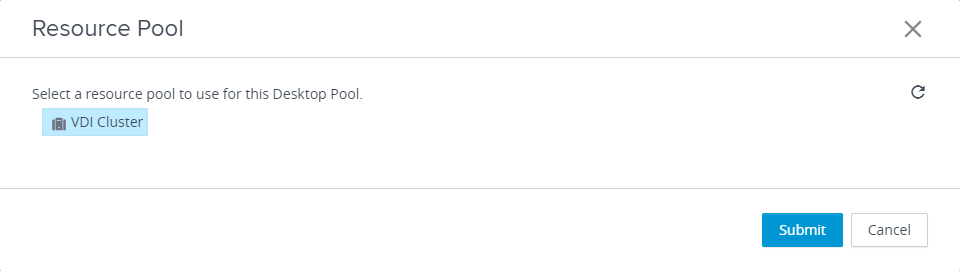
9-E. The next step is to place the desktops into a Resources Pool. In this case, I have not resource pools configured, and so the desktops would be placed in the Cluster Root.
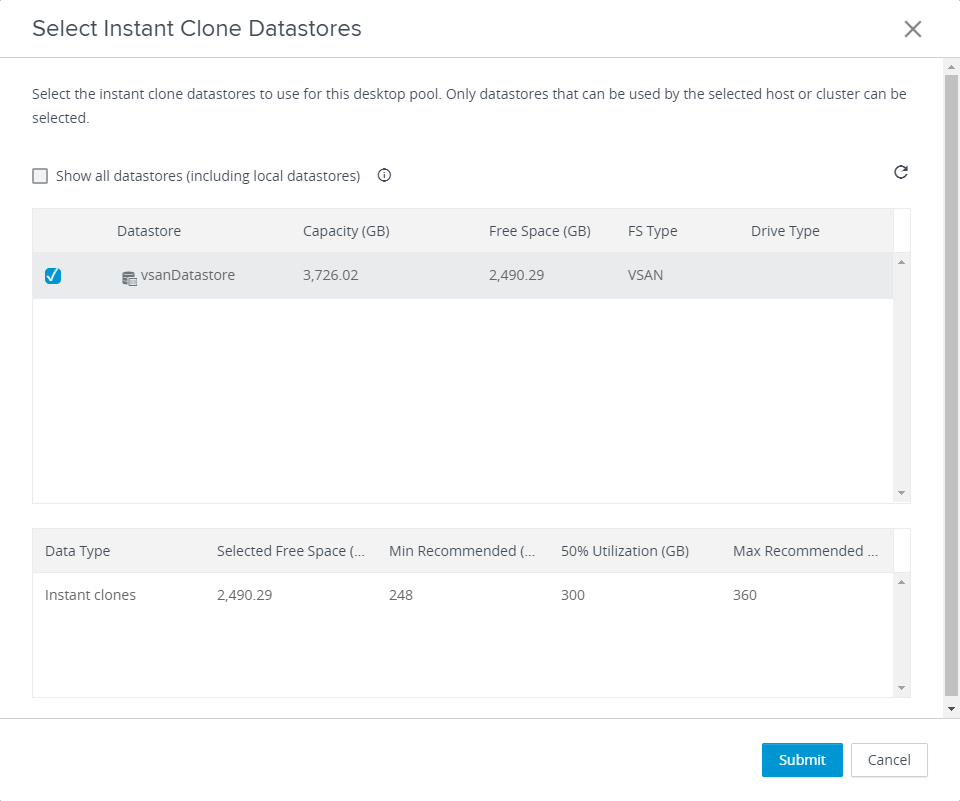
9-F. Adjacent, y'all volition demand to pick the datastores that the desktops will be stored on.
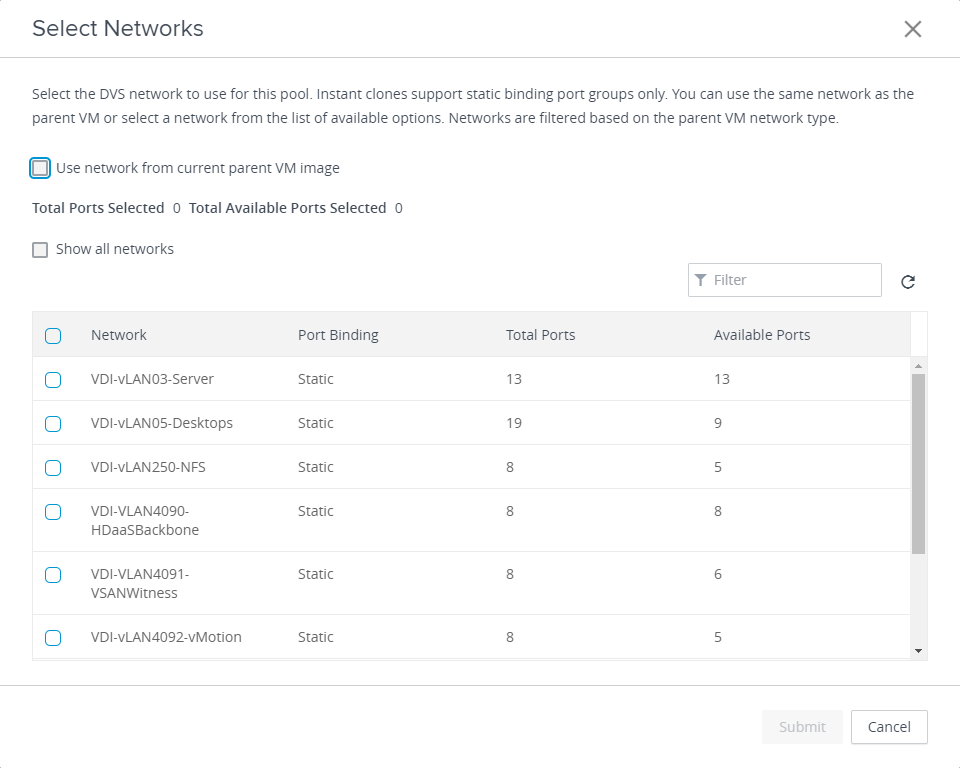
9-G. When using Instant Clone destops, you volition accept the selection to configure the network or networks that the desktops are deployed onto. By default, all desktops are deployed to the same network every bit the parent VM, simply administrators have the power to optionally deploy virtual desktops to dissimilar networks.
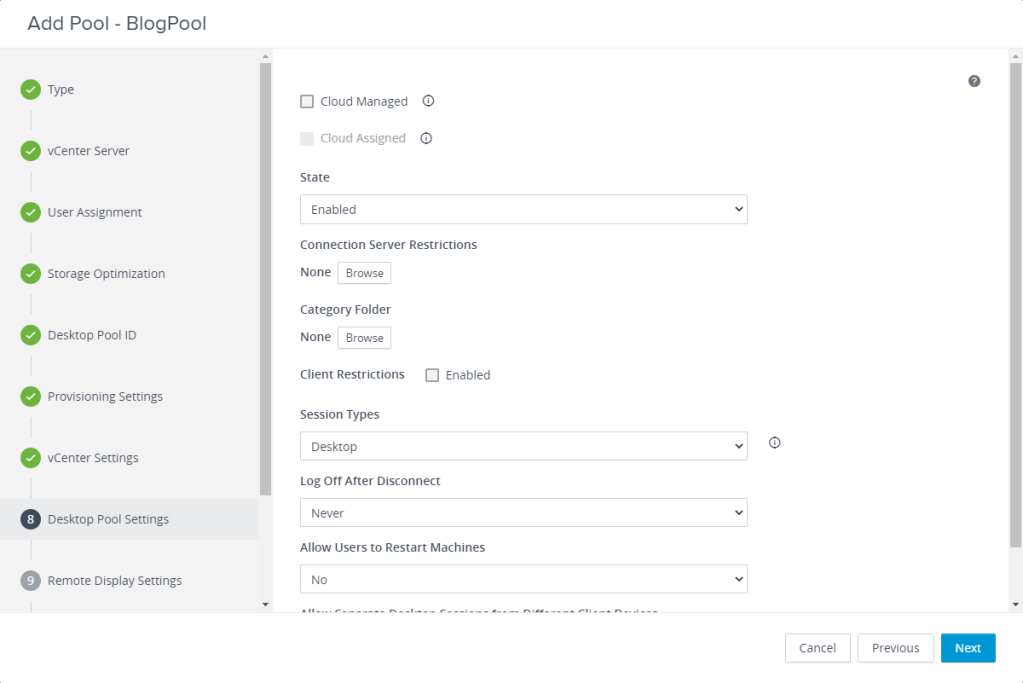
x. After configuring the vCenter settings, you need to configure the Desktop Pool settings. These settings include:
- Desktop Pool State – Enabled or Disabled
- Connectedness Server Restrictions
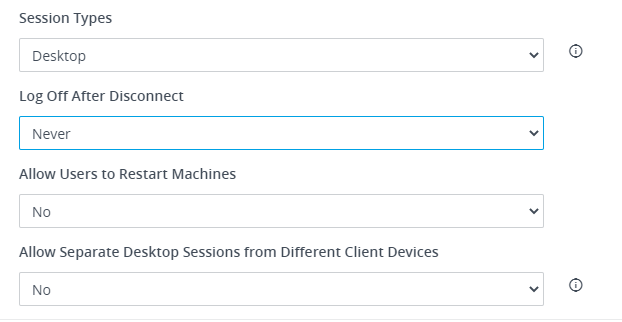
- Pool Session Types – Desktop merely, Published Applications, or Both
- Disconnect Policy
- Cloud Management – Enable the pool to exist consumed past the Universal Broker service and entitled from the Horizon Cloud Service
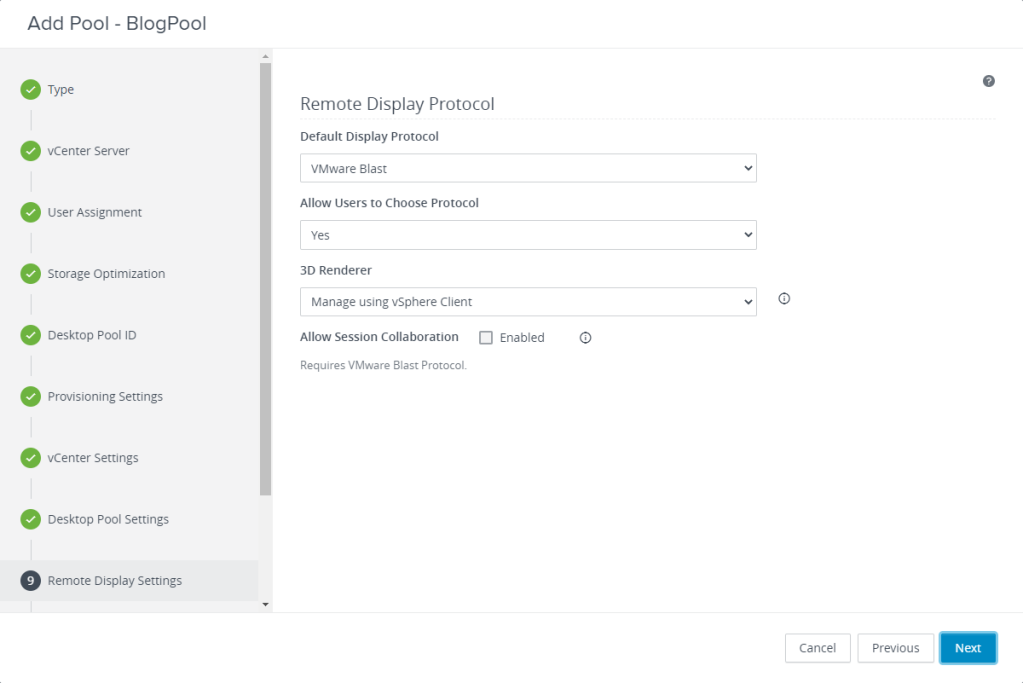
12. Configure the remote brandish settings. This includes choosing the default display protocol, assuasive users to select a different protocol, and configuring the 3D rendering settings such equally enabling the pool to use NVIDIA GRID vGPU. Administrators can besides choose to enable Session Collaboration on the pool.
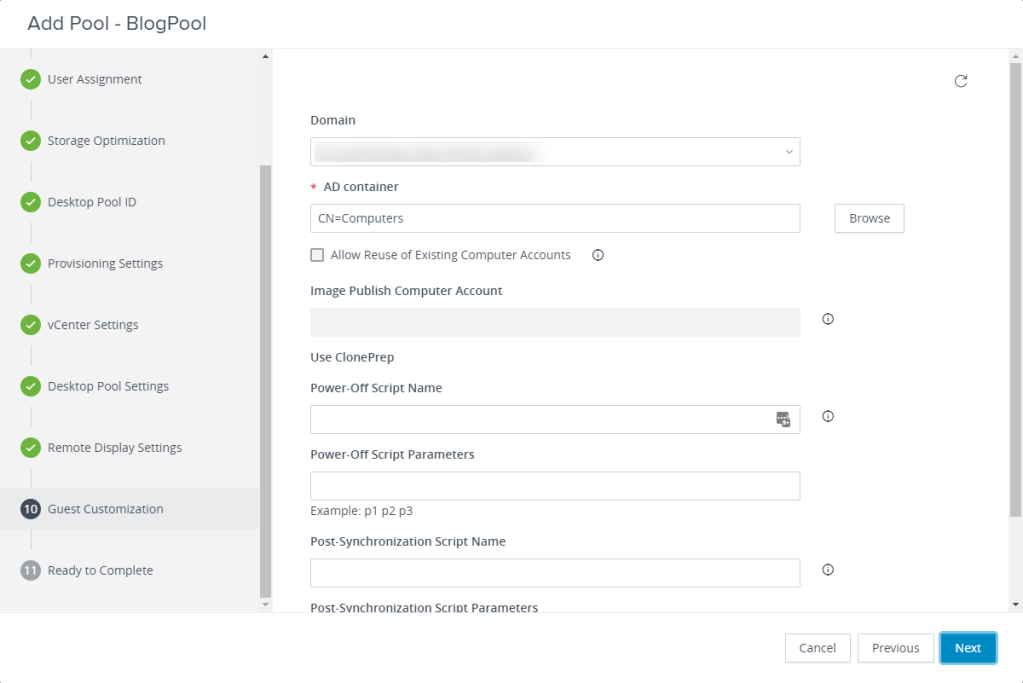
xiii. Configure Guest Customization settings by selecting the domain that the provisioned desktops will join, the OU where the accounts will be placed and any scripts that volition be run after provisioning.
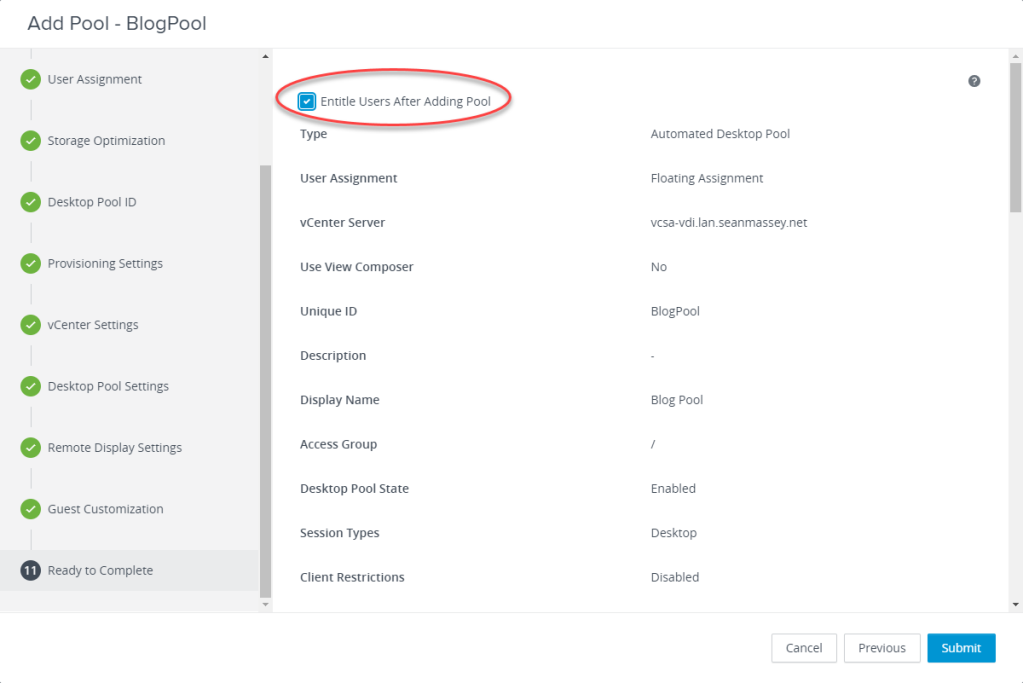
14. Review the settings for the pool and verify that everything is correct. Before you click Finish, bank check the Entitle Users checkbox in the upper right. This will allow yous to select the users and/or groups who have permission to log into the desktops.
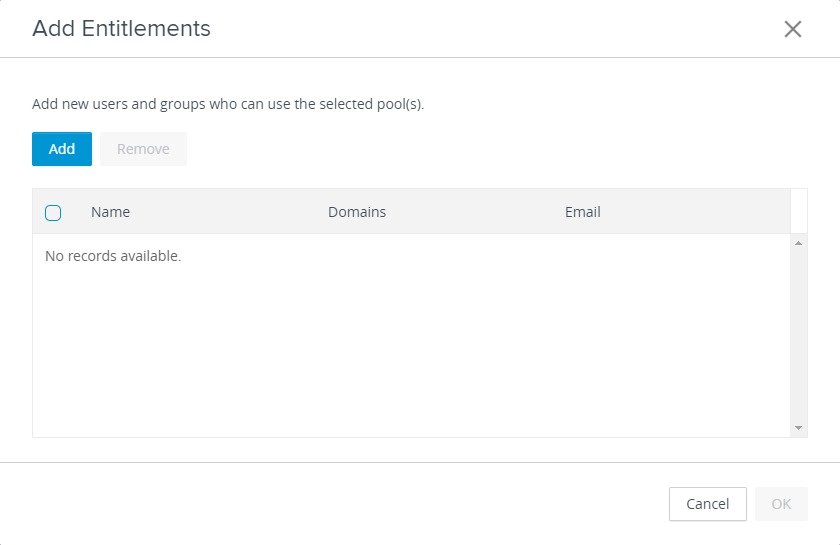
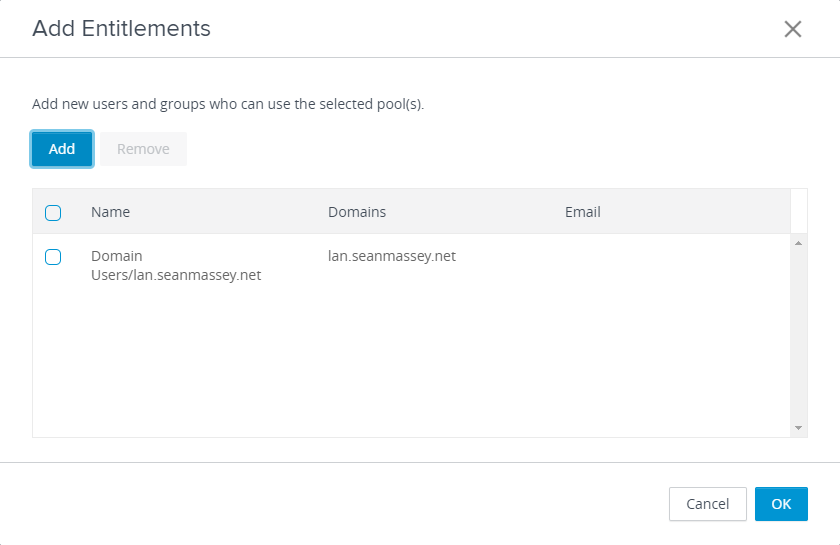
15. After you click Finish, you lot will need to grant access to the puddle. View allows you to entitle Agile Directory users and groups. Click Add to entitle users and groups.
sixteen. Search for the user or grouping that you want to add to entitle. If yous are in a multi-domain surround, you can change domains by selecting the domain from the Domains box. Click on the users or groups that yous want to grant admission to and click OK.
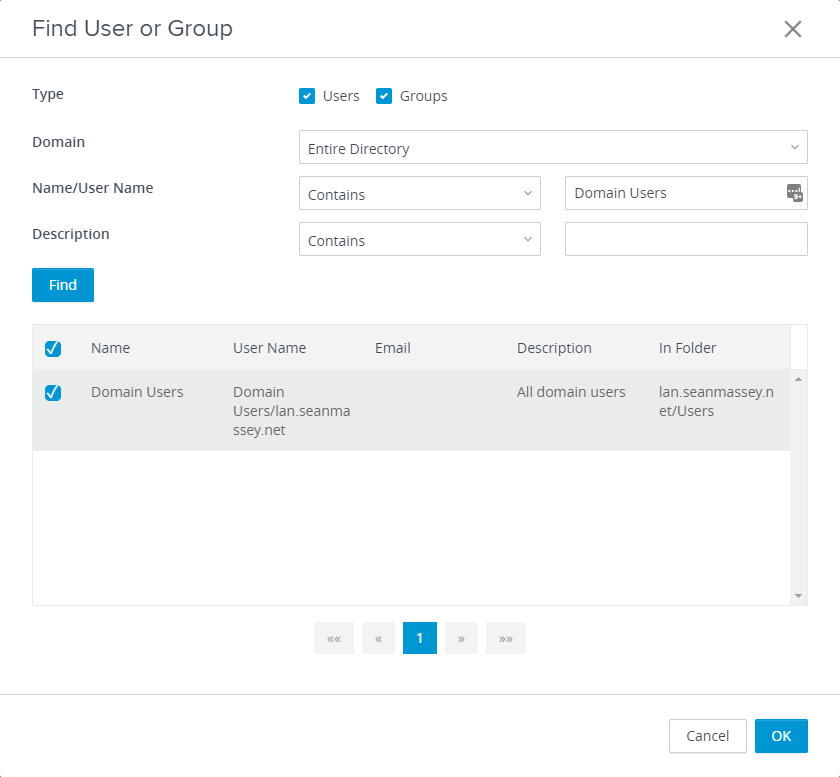
Note: I recommend that y'all create Active Directory security groups and entitle those to desktop pools. This makes information technology easier to manage a user'due south puddle assignments without having to log into View Administrator whenever you lot want to make a change.
17. Review the users or groups that will be entitled to the pool, and click OK.
19. You tin can check the status of your desktop puddle cosmos in vCenter. If this is a new puddle, it volition demand to consummate the Instant Clone provisioning procedure. To learn more nearly the parent VMs that are provisioned when Instant Clone pools are created, please see this commodity for traditional instant clones or this video for Instant Clone pools using Smart Provisioning.
Once the desktops have finished deploying, you will exist able to log into them through the Horizon HTML5 Client or the Horizon Client for your endpoint's platform.
I realize that there are a lot of steps in the procedure of creating a desktop pool. Information technology doesn't accept nearly as long as it seems in one case you lot go the hang of it, and you will be able to fly through it pretty chop-chop.

Source: https://thevirtualhorizon.com/2020/10/23/horizon-8-0-part-9-creating-your-first-desktop-pool/
Posted by: nunezpriever.blogspot.com
0 Response to "How Do You Clean The Arctic 8 Horizon Tech"
Post a Comment